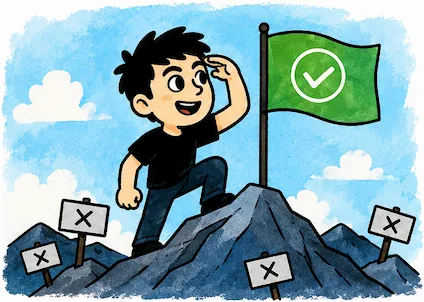
Start with the real problem
Technology comes later. First we need to understand what is actually broken, slow or unclear.
The goal is to avoid vague work, unclear expectations and unnecessary surprises. A good process helps both sides stay clear on the problem, the scope, the progress and the final outcome.
Principles
Each project is different in size and technology, but the working principles remain consistent to reduce ambiguity and protect quality.
Technology comes later. First we need to understand what is actually broken, slow or unclear.
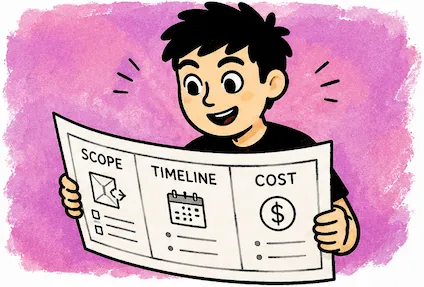
Features, delivery stages and priorities should be defined clearly before execution goes deep.
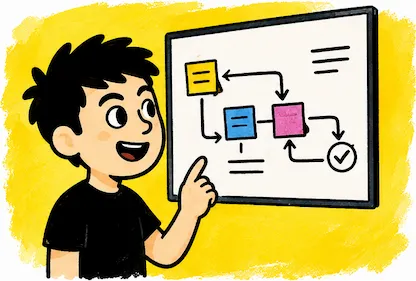
Updates should make the work clearer, not heavier. The point is progress, not noise.
Stages
The exact depth changes by project, but most work follows this structure to keep things grounded and lower-risk.
Kickoff
What are you trying to achieve, what is already there, and what counts as a good outcome?
Scope
We separate what must happen now from what can wait, so the first version stays practical and focused.
Blueprint
Before deep implementation, I usually map key screens, modules, workflows and how everything connects.
Build
The product is built in visible steps so feedback can happen early instead of only at the end.
Launch
Main flows, responsiveness, performance and operational handoff are checked before real use.
Support
Some issues only appear in real usage, so post-launch support is part of the quality, not an afterthought.
Clarity
One of the most frustrating parts of working with an external partner is not knowing where the project stands, what is still missing, and when your feedback is needed. I want those parts to stay clear enough that you never have to guess.

You should not have to wait until the very end to understand progress. Each phase should have a clear status and a visible checkpoint.

This helps both sides stay proactive, know what needs to happen next, and avoid unnecessary waiting.
This avoids the common situation where both sides think something is settled, but later realise they understood it very differently.
Every implementation decision should connect back to the original question: what does this solve, and does it support the real business goal?
Risk handling
Not every project goes exactly as planned. What matters is having a calm, practical way to respond so the work does not drift too far off course.
I break it down by goal, priority and phase instead of forcing every detail to be final too early. If something is still unclear, it stays open in a controlled way rather than being treated as if it were already settled.
Not every change should be pushed straight into the current scope. I separate small adjustments from real scope expansion so timeline and expectations stay protected.
That is why I prefer clear preview checkpoints. Feedback at the right time saves far more time than collecting every comment only at the very end.
In those cases, the best path is usually to narrow the first phase, make the core part work well first, and expand in the next steps instead of trying to carry everything at once.
FAQ
That is completely fine. This process is designed for exactly that situation. I usually start by understanding the real problem first, then suggest the direction that fits your current reality and goal more accurately.
That is not a problem. Not every project needs to start from zero. I can work on the part that actually needs attention: redesigning a website, connecting systems, adding AI, improving a flow, or extending existing features.
Yes. I prefer short, clear communication focused on the decisions that really matter, so you do not have to spend time on unnecessary back-and-forth.
Yes. Depending on the type of project, support can include fixing early issues, further optimisation, periodic maintenance, or expanding with new modules later on.

Start here
You can start with the detailed brief, or send a direct message so we can clarify the problem together first.