Operational flow is fragmented
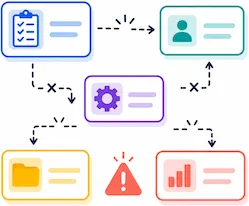
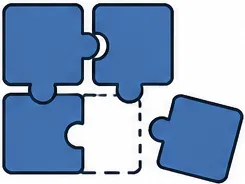
Work moves across several people and tools without one clear flow from start to finish.
Connect websites, CRMs, internal tools, ERPs and third-party services into a more unified operating flow, then add AI where it genuinely improves productivity or decision-making.
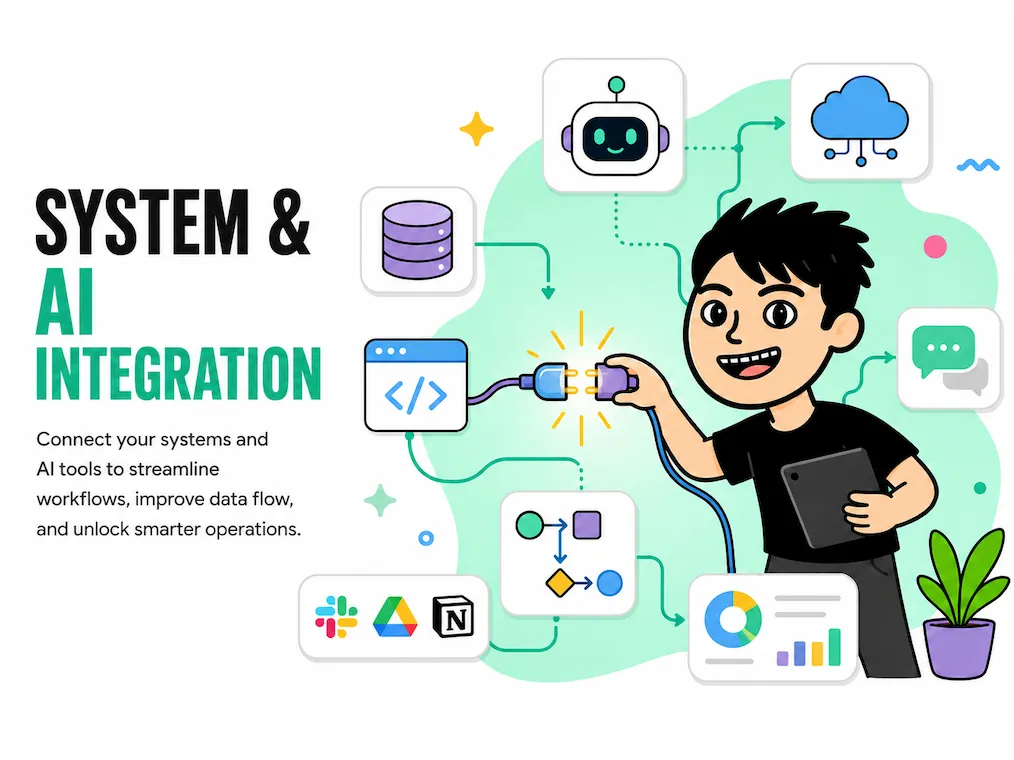
These usually appear when data, tools and workflows are fragmented, making both operations and AI adoption harder than they should be.
Work moves across several people and tools without one clear flow from start to finish.
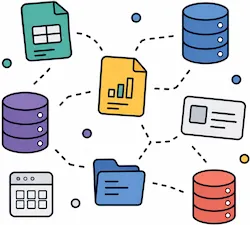
Customer information, lead status, schedules or internal data are scattered across multiple platforms.
The team loses time transferring data, updating multiple systems or checking information by hand.
When a problem appears, it is difficult to see where the data moved, where it stopped and who owns the next step.
The business wants AI support, but the current structure is still too disconnected for AI to create reliable value.
As scale increases, the weak links between tools become more painful and harder to ignore.
Outcomes
The real value is not “having APIs”, but having a smoother operational flow from one system to the next.
Less repeated handling means the team can do more without growing overhead at the same rate.
The business can handle more volume without adding the same amount of manual work each time.
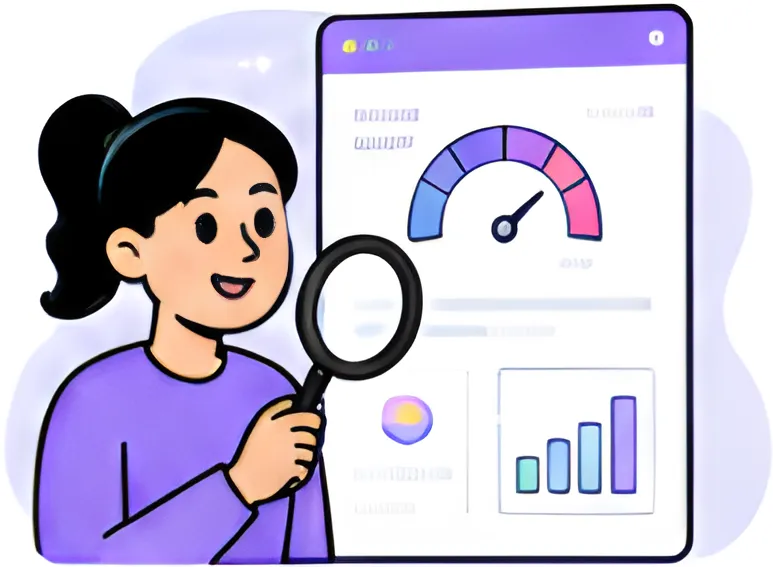
Connected data makes it easier to see what is happening and act faster with better visibility.
AI becomes much more useful when the flow underneath it is already structured and consistent.
Before & after


Integration process

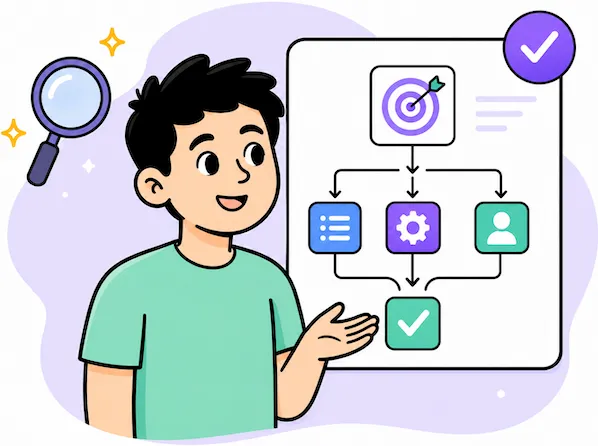
First we map what systems already exist, what each one does and where the real friction currently happens.
Not every integration should happen at once. We start with the links that create the clearest practical impact.
The structure needs clarity around triggers, sync logic, exceptions and ownership before implementation goes deep.
Integrations and AI layers are checked in practical conditions, not only in sandbox or ideal scenarios.
Once the system is live, new dashboards, automations or AI use cases can be added more safely.
I focus on how the business really works before talking about APIs, AI or platform connections.
Good integration is often about sequencing, not just technology. The wrong order can make the whole system noisier.
The goal is a reliable flow that can still support future reporting, automation and AI growth.
Live systems reveal live edge cases, so post-launch refinement is an important part of the work.
I prefer transparency around priorities, delivery boundaries and what each stage is meant to achieve.
A connected system usually becomes more valuable over time, so the work should support future evolution too.
Case studies
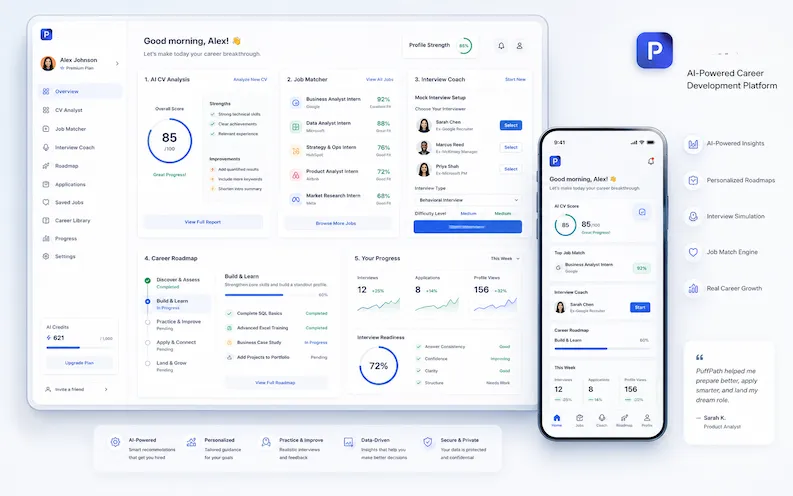
AI-based CV analysis, mock interview flows and job matching logic.
Open case study (VI)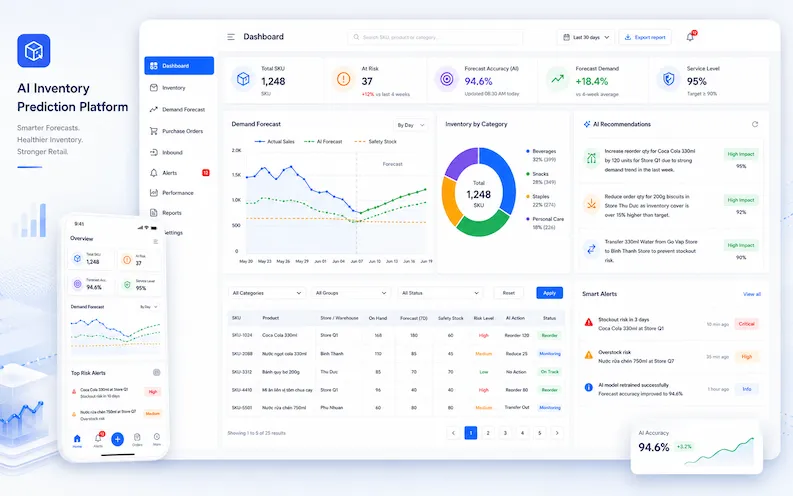
Demand forecasting, stock risk visibility and smarter replenishment suggestions.
Open case study (VI)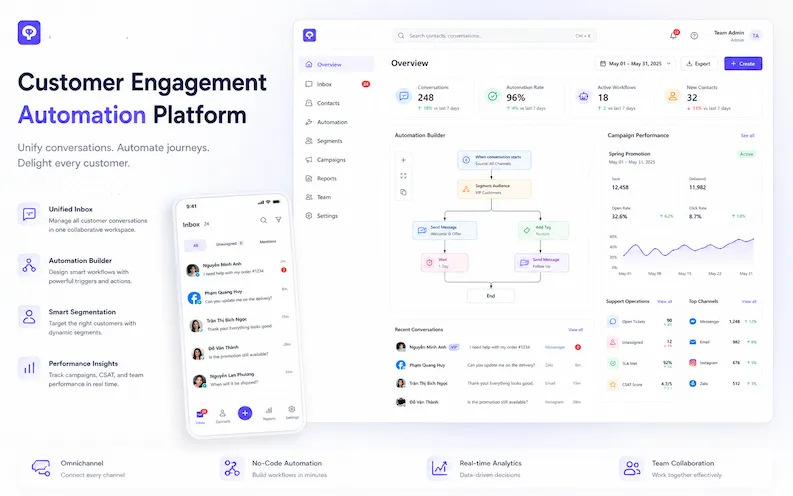
Automation, segmentation and connected campaign operations.
Open case study (VI)FAQ
Yes. Mapping the current flow and identifying the highest-impact connections is part of the early work.
Usually not. I prefer to keep what already works and only change what is necessary to improve the flow.
No. In many cases, better structure and better system connections already create a strong result before AI is added.
Yes. Once the base flow is connected properly, future AI, dashboards or automation become much easier to add safely.

Contact
If your data and tools feel fragmented, I can help define a more practical integration path.